



One-time password (OTP) verification, without a disposable number check, creates additional risks that can lead to the creation of fake accounts and scams.
Online services offering disposable or temporary numbers, provide a quick and private way to receive SMS verifications. Instead of using their real number, a mobile user can just pick one from a website and receive a one-time password (OTP). It can be more convenient and safer, while it helps avoid spam, telemarketing, unwanted tracking of personal numbers and a range of fraud risks.
Services offering disposable or temporary numbers come in two forms: those that are free and open to anyone, and those that charge a small fee for a number tied to a single app or website. The free ones dominate, as there are no costs involved, and anyone can read the incoming OTPs online and sign up for multiple services without revealing their identity. In fact, most of these sites operate with no identity checks at all, which makes them ideal for running scams anonymously at scale.
Consumer harm
Scammers use disposable numbers to create dozens, or even thousands, of accounts that look completely legitimate. They show up in dating apps, online marketplaces or messaging platforms pretending to be real users, brand representatives or customer-support agents. Victims are tricked into sharing credentials, clicking phishing links or sending money. Since these numbers are recycled constantly, blocking one doesn’t resolve the issue, as another one pops up within minutes.
Each scam account looks credible because the platform shows the phone number as “verified”. Therefore, the badge that is meant to instill trust is enabling the opposite – leaving consumers unprotected and exposed to fraudsters.
Why the surge now?
Disposable phone numbers have become much more common in recent years, mainly because they are inexpensive and easy to create using internet-based technologies. SMS-capable virtual VoIP numbers do not require a physical SIM card and can be activated or deactivated almost instantly.
This has made it possible for new websites to appear offering free disposable numbers for online number verification purposes. Although the numbers are provided at no cost, these sites typically generate income through advertising, upgrades to private or paid numbers, or by affiliate deals. The growing demand comes from two key groups: people who wish to protect their privacy when sharing their telephone number online, and scammers. The latter take advantage of the easy access to free disposable numbers to hide their identities and create fake accounts on a large scale.
A recent example: SIMCartel
In October 2025, police in Latvia dismantled a large SIM-farm network that was feeding temporary number services. The operation, called SIMCartel, seized around 1,200 SIM boxes and 40,000 active SIM cards linked to tens of millions of fake online accounts, which had defrauded victims out of millions of Euros in total. Find out more here.
Below is an example of a disposable number website that has been taken down.
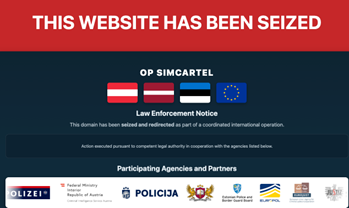
The SIMCartel case shows how large these operations have become, using an entire infrastructure to produce disposable numbers used for scams, fake accounts and OTP abuse.
Solution: protect consumers from the exploitation of disposable numbers
Stopping this problem means acting before the OTP is even sent. If enterprises can recognise disposable numbers during onboarding, they can block fake sign-ups, stop account takeovers, monitor suspicious new accounts and protect users from impersonation or other attacks.
The GSMA Disposable Number Check service helps do exactly that. It flags disposable numbers in real time so that enterprises only interact with truly verified and trustworthy phone numbers, fully protecting consumers.
It is a small change with a big impact. If you would like to learn more or see a demo, please get in touch via the form below to find out how GSMA Disposable Number Check can strengthen your onboarding and protect your users.